OpenAI Launched a Defensive AI Security Platform the Same Day Google Confirmed the First AI-Built Zero-Day
The timing wasn't subtle.
On May 11, 2026, Google's Threat Intelligence Group published what it called the first confirmed case of a threat actor using AI to build a zero-day exploit. Hours later, OpenAI announced Daybreak, an agentic cybersecurity platform built on GPT-5.5-Cyber and Codex Security, with six named enterprise security partners signed on at launch: Cloudflare, Cisco, CrowdStrike, Palo Alto Networks, Oracle, and Akamai.
Whether or not the coordination was intentional, the two events tell a coherent story about where AI-assisted security is headed and what that means for engineering teams responsible for software supply chain integrity.
What GTIG actually confirmed
GTIG's report contains a sentence that changes the threat landscape: "For the first time, GTIG has identified a threat actor using a zero-day exploit that we believe was developed with AI." That's not a theoretical warning. It's a confirmed incident.
A financially motivated cybercrime group used a frontier AI model to develop a working 2FA bypass targeting a popular open-source web-based system administration tool. GTIG assessed with high confidence that the exploit was AI-generated, based on forensic markers in the code: educational docstrings, a hallucinated CVSS score for a vulnerability that had never been assigned a CVE, and a textbook Pythonic structure characteristic of LLM output.
The vulnerability stemmed from hardcoded trust assumptions in the tool's authentication logic. GTIG's conclusion was that frontier LLMs now have an increasing ability to perform contextual reasoning, effectively reading a developer's intent to correlate 2FA enforcement logic with the contradictions of hardcoded exceptions.
That's a meaningful shift, and it represents semantic analysis of developer intent, which means the category of flaws AI can now find has expanded.
Google worked with the affected vendor to responsibly disclose and patch the flaw before the campaign launched. The vendor and the tool weren't named.
What Daybreak actually is
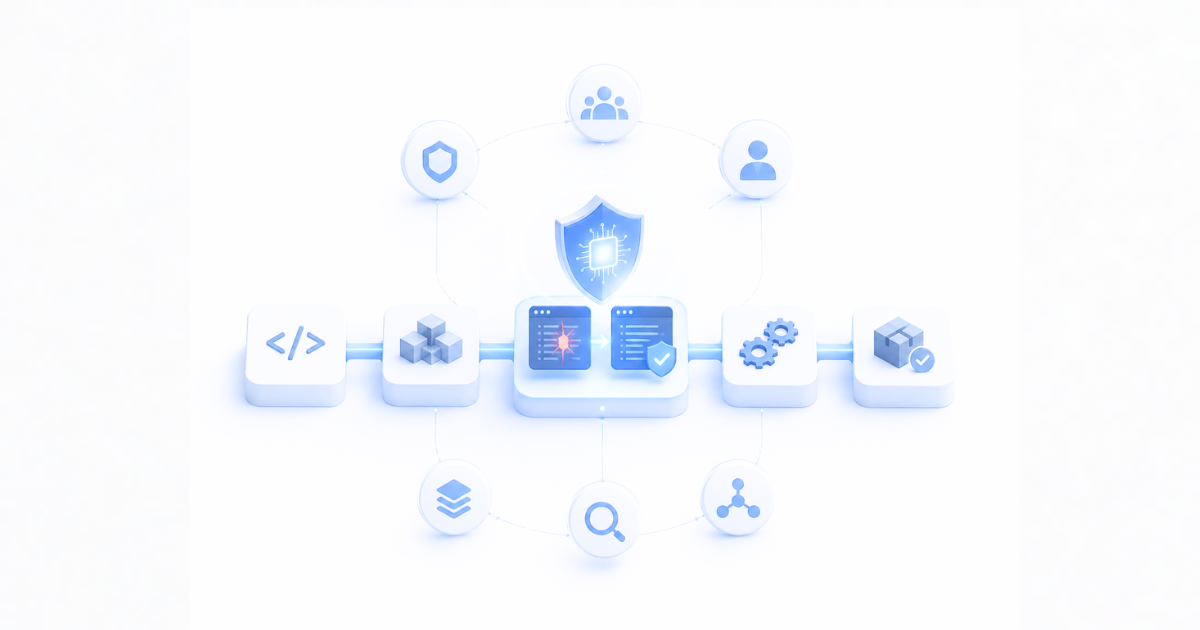
Daybreak is built on Codex Security, which OpenAI launched in March 2026 as an application security agent and has now repositioned into a full enterprise security platform. Rather than functioning as a passive scanner, Codex Security ingests a software repository, builds a codebase-specific threat model, maps realistic attack paths, tests vulnerabilities in isolated environments, and proposes patches for human review.
OpenAI describes the system as an "agentic harness," a supervisory loop in which the model plans and reasons while Codex Security executes, with human approval gates that security teams can configure.
Three model tiers govern access. GPT-5.5 handles general use. GPT-5.5 with Trusted Access for Cyber is reserved for verified defenders doing vulnerability triage and malware analysis. GPT-5.5-Cyber, in limited preview, is available for red teaming, penetration testing, and controlled validation workflows.
That third tier is the one worth scrutinizing. OpenAI is explicit that GPT-5.5-Cyber isn't designed to extend raw capability beyond GPT-5.5. It's "primarily trained to be more permissive on security-related tasks." The unlock is in what it will do, not what it can do.
For security practitioners, that distinction matters practically: defenders who've historically hit refusal walls on payload crafting, exploit reproduction in lab environments, or reverse engineering of malware samples are the target audience. The model doesn't know more; it just won't stop mid-task.
Shift-left framing and what it competes with
OpenAI's stated position is that Daybreak embeds security earlier in the development process rather than catching issues post-deployment. OpenAI's own framing describes the goal as bringing secure code review, threat modeling, patch validation, dependency risk analysis, detection, and remediation guidance into the everyday development loop so that software becomes more resilient from the start.
That's not a new idea in AppSec, but it's the first time a major AI lab has shipped an agentic platform trying to operationalize it at enterprise scale.
The direct comparison is Anthropic's Project Glasswing, which uses Claude Mythos Preview for similar defensive workflows. Glasswing, launched April 7, 2026, deploys Mythos to roughly 50 curated organizations including AWS, Apple, and Microsoft.
Daybreak is more broadly accessible via a request model and launched with a larger named partner network. The tradeoff is legible: Glasswing is the tighter, higher-trust deployment. Daybreak is the more productized platform with broader distribution ambitions. Anthropic frames Mythos around constitutional AI safety and careful dual-use management.
OpenAI's Daybreak framing is accelerating defenders at scale, using audit controls rather than model-level restrictions to manage dual-use risk. That's a genuine philosophical difference with real engineering implications for how teams integrate these systems.
What the partner list signals
Six named enterprise security partners at launch means product integrations are already in progress across the major segments of the security market: network edge (Cloudflare, Akamai), endpoint and threat detection (CrowdStrike), network infrastructure (Cisco), next-gen firewall and SASE (Palo Alto Networks), and cloud infrastructure (Oracle). 61% of CAIOs in IBM's recent C-suite study reported controlling their organization's AI budget, which means these partnerships are distribution channels into enterprise procurement cycles that security vendors already own.
The GTIG disclosure and the Daybreak launch, coinciding on May 11, is either excellent timing or excellent coordination. Either way, the effect is the same: AI-generated offensive exploits are no longer hypothetical, and the commercial infrastructure for AI-assisted defense now has a named platform, a tiered access model, and six major vendors moving product through it.
Security engineering teams that haven't evaluated where agentic vulnerability detection fits into their CI/CD pipelines now have a more concrete reason to start.