Alibaba Unveils Zhenwu M890 AI Accelerator and Qwen 3.7-Max at Hangzhou Summit
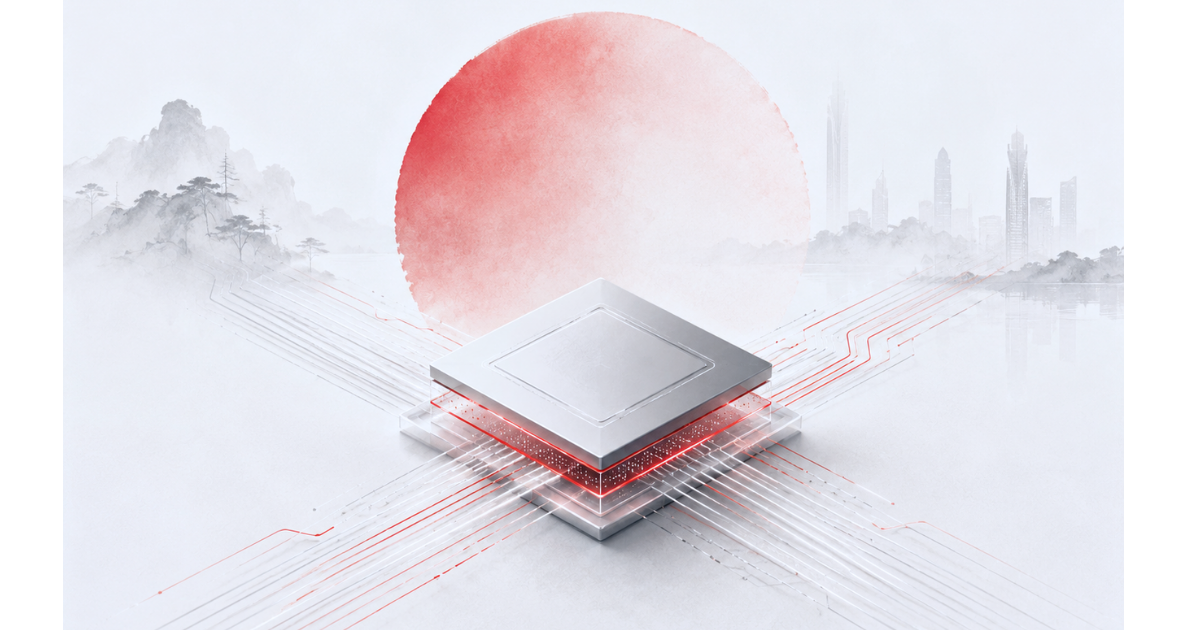
Alibaba's chipmaking unit T-Head launched the Zhenwu M890 AI accelerator at the 2026 Alibaba Cloud Summit in Hangzhou on Wednesday, paired with the release of a new flagship Qwen 3.7-Max large language model. Both products are positioned at agentic workloads and form the centerpiece of Alibaba's response to Beijing's directive that domestic tech firms stop buying Nvidia AI chips.
The M890 ships with 144GB of HBM3 memory, a 50% increase over the 96GB on the previous-generation Zhenwu 810E, and 800 GB/s of interconnect bandwidth, up 100 GB/s from the 810E. The chip supports FP32, FP16, FP8, and FP4 data formats, runs on a PCIe 5.0 x16 interface, and is designed to handle training and inference on a single die. Alibaba claims the M890 delivers roughly three times the performance of the 810E, per Bloomberg's coverage. Some outlets, including Wccftech, framed the same 3x figure as a comparison against Nvidia's H20. The two claims are not equivalent, and Alibaba has not released independent benchmark data to support either.
T-Head said it has already shipped more than 560,000 Zhenwu chips to over 400 external customers across roughly 20 industries, including automotive and financial services. Alibaba also disclosed a long-term semiconductor roadmap with a successor chip, the V900, scheduled for the third quarter of 2027, and the J900 for the third quarter of 2028.
Qwen 3.7-Max, launched alongside the chip, is engineered for coding and long-running agent tasks. Alibaba says the model can execute tasks for up to 35 continuous hours and connect to more than 1,000 tools and systems. The Max-Preview release ranks 13th overall on Text Arena, seventh in math, ninth in expert-level prompts, and ninth in software and IT. Max remains proprietary, while the smaller Qwen Plus tier continues to be open-sourced.
The launch lands against an active export-controls backdrop. The US Department of Commerce earlier this year cleared roughly ten Chinese firms, including Alibaba, Tencent, and ByteDance, to buy Nvidia's H200 chip under a 75,000-unit-per-customer cap. China's Cyberspace Administration then barred domestic firms from those purchases and directed them to rely on local suppliers. Independent third-party benchmarks of the M890 against Nvidia's H100, H200, or B200 are not yet available.