Daily Signal: May 20, 2026
Welcome to Algorithm Times' Daily Signal, a daily sweep of the AI headlines worth reading, with context for why they matter.
Today's theme is capital and capacity moving in opposite directions on the same balance sheets, with workforce dollars compressing as AI capex expands. We're also seeing China's domestic silicon stack ship at scale while Nvidia access stays contested, and frontier model pricing curves shifting under another GA release.
Meta laid off roughly 8,000 employees and canceled 6,000 open requisitions today, with around 7,000 staff being redirected into new AI teams.
The notifications went out globally this morning, starting with Singapore at 4 a.m. local time. US workers get 16 weeks of severance plus two weeks per year of tenure. Affected groups include integrity, cybersecurity, and content design, all areas Meta has repeatedly told regulators are critical to platform safety. Per Al Jazeera's reporting, this is roughly 10% of global headcount and the largest single-day Meta cut since the 2022 to 2023 "Year of Efficiency" rounds. The framing from leadership is explicit: payroll dollars are being repointed at AI infrastructure and AI-focused product teams. Two things are not yet confirmed. First, whether the 7,000 redirected employees are net new AI roles or reclassifications. Second, how much of the cut is genuinely AI-driven productivity displacement versus general headcount overhang from the 2021 to 2022 hiring boom.
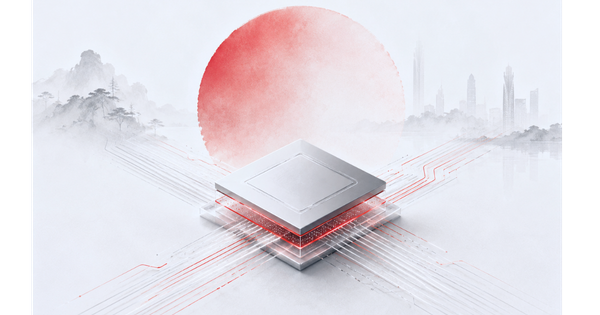
Alibaba's T-Head unit unveiled the Zhenwu M890 AI accelerator in Hangzhou and released Qwen 3.7-Max.
The M890 ships with 144GB of GPU memory and 800 GB/s of interchip bandwidth, with Alibaba claiming roughly 3x the performance of the previous Zhenwu 810E. Per Bloomberg's coverage, T-Head says it has already shipped more than 560,000 Zhenwu chips to over 400 external customers across roughly 20 industries, which is the more material data point than the spec sheet. China's Cyberspace Administration barred domestic firms from buying Nvidia AI chips earlier this year, and the M890 plus a fresh Qwen flagship is the substitute stack Beijing wants the rest of the country running on. The roadmap goes V900 in Q3 2027 and J900 in Q3 2028. Independent benchmarks are not yet public, so the 3x claim should sit in the vendor-reported bucket until someone outside Alibaba runs the comparison.
Nvidia reports Q1 FY27 earnings after the close tonight, with company guidance of $78B in revenue plus or minus 2%.
Consensus is roughly $78B revenue and $1.77 EPS, with data center revenue near $73B and gross margins around 75%. The two metrics worth watching, per this HeyGoTrade preview, are the Blackwell ramp curve and the H200 China resale pipeline now that BIS allows case-by-case approvals up to 75,000 units per Chinese customer. Hyperscaler capex commentary on the call matters more than the print itself. If Nvidia repeats the $1.7T AI infrastructure TAM by 2030 without raising it, the read is that growth is still pacing to plan rather than reaccelerating. If management hedges on China revenue contribution given the new export-control mechanics, expect AMD and the Chinese domestic chip thesis to absorb the marginal narrative bid.
Google made Gemini 3.5 Flash generally available at I/O yesterday.
Reported scores include 76.2% on Terminal-Bench 2.1, 83.6% on MCP Atlas, and 84.2% on CharXiv Reasoning, which Google says puts 3.5 Flash above the previous Gemini 3.1 Pro tier on coding and agentic benchmarks. The Android Authority writeup notes Google is positioning Flash as the default model across the Gemini app, AI Studio, Antigravity, and Gemini Enterprise. Pricing is up from 3.0 Flash, which matters: the cost-per-quality curve for the Flash tier is bending toward Pro-tier economics, not away from them. For teams running agent pipelines or high-volume coding workloads, the immediate question is whether the speed and benchmark gains justify migrating off cheaper third-party or open-weight options. Gemini 3.5 Pro is in internal use and expected to ship next month.
OpenAI committed S$300M (about $234M) to open its first applied AI lab outside the US, in Singapore.
Per CNBC's reporting, the lab will hire more than 200 people, embed engineers across Singapore's public services, healthcare, finance, and digital infrastructure programs, and run a training pipeline for mid-career engineers. This is OpenAI's first national-government applied partnership of this scope and signals a shift from sales-led country expansion to deployment-led country expansion. Practical read for engineers in the region: expect more Singapore-localized fine-tunes, sovereign deployment options, and a tighter hiring market for senior applied AI roles in APAC. Whether OpenAI replicates this model in other governments (the UAE and Saudi Arabia are the obvious candidates) will determine whether this is a one-off or a template.
OpenAI joined C2PA as a Conforming Generator and embedded Google DeepMind's SynthID watermark across ChatGPT, Codex, and API image outputs.
The combined stack is metadata via C2PA, a perceptual watermark via SynthID, and a public verification tool now in preview for OpenAI-generated images. Per OpenAI's announcement, this is the most complete provenance setup any major lab has shipped publicly. For developers building detection or trust-and-safety tooling, the practical implication is that you can now read C2PA assertions and check the SynthID signal independently, which gives you two failure modes to fall back on rather than one. The hard problem remains the same: watermarks survive some transformations and not others, metadata gets stripped routinely by social platforms, and the verification tool only covers OpenAI outputs. The cross-industry expansion is the bit that would actually matter, and it remains unscheduled.
Anthropic is in early talks to raise at least $30B at a valuation above $900B.
Bloomberg reported the talks last week, which would put Anthropic above OpenAI's most recent mark. The number to track is not the headline valuation but the implied compute commitment behind it. A $30B raise at this scale almost certainly funds another multi-year capacity deal with one or both of AWS and Google Cloud, which would extend the capital-concentration pattern visible in the AMD-OpenAI 6GW deal and the Meta-AMD 6GW deal from earlier this year. For closed-frontier pricing, the implication is straightforward: more committed capacity means more pressure to fill it, which means continued downward pressure on top-tier API pricing for high-volume customers and continued upward pressure on talent costs at the labs doing the spending.