DeepSeek V4 Launched on Huawei Chips. The Timing Wasn't an Accident.
On April 24, one day after the White House Office of Science and Technology Policy published a memo accusing Chinese entities of running "deliberate, industrial-scale campaigns" to distill American frontier AI models, DeepSeek released preview versions of V4 on Huawei Ascend hardware.
The juxtaposition was pointed enough that it's hard to read as coincidental.
Start with what V4 actually is, technically.
V4-Pro carries 1.6 trillion total parameters, making it the largest open-weight model available. But the number that matters more is 49 billion: the active parameter count per token inference, enabled by a mixture-of-experts architecture that selectively activates only a fraction of the full model for any given task.
V4-Flash, the smaller variant, has 284 billion total parameters with 13 billion active. Both support a 1-million-token context window as a native default feature, not an add-on, and were pre-trained on approximately 32-33 trillion tokens. On world knowledge benchmarks, V4-Pro outperforms all other open-source models currently available and trails only Google's closed-source Gemini-Pro-3.1.
But the architecture isn't the story. The hardware is.
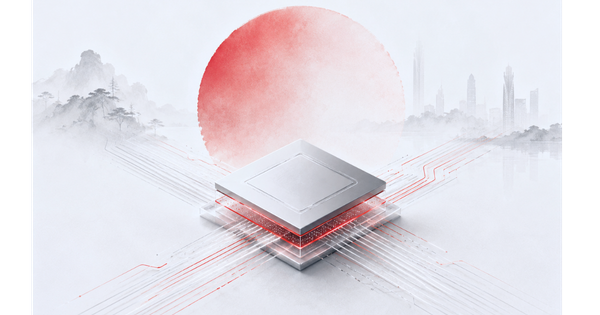
V4 is the first major frontier model explicitly designed and optimized to run on Huawei's Ascend AI processors. Huawei confirmed day-zero compatibility across its full Ascend supernode product line, including the latest 950 series. DeepSeek noted that V4-Pro API pricing, already down from its launch rate, is expected to fall further as Huawei scales up production of the Ascend 950 in the second half of 2026.
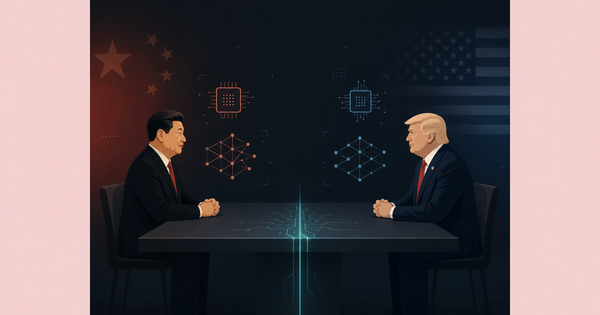
This matters because the U.S. semiconductor export control strategy rested on a specific assumption: that restricting access to advanced Nvidia and AMD chips would materially slow Chinese AI development.
V4's launch is a direct test of that assumption. Whether it was trained primarily on Nvidia or Huawei hardware has not been confirmed by DeepSeek, and Commerce Secretary Lutnick separately said that no advanced Nvidia chip shipments actually cleared to China, despite a January conditional approval window.
The question of training hardware remains genuinely open. What is not open is that V4 is now being served on Huawei Ascend clusters at production scale, which means the inference layer of China's AI stack no longer depends on U.S. silicon. That is a different and arguably more durable kind of independence than training capability.
The distillation question deserves precision rather than heat.
The White House OSTP memo accused Chinese entities of using proxy accounts and jailbreaking techniques to extract proprietary model outputs. Anthropic disclosed in February that it identified three Chinese labs, including DeepSeek, conducting campaigns that generated over 16 million exchanges with Claude through approximately 24,000 fraudulent accounts.
DeepSeek's own V4 research paper describes training using "On-Policy Distillation," a technique in which the model first generates its own responses and then consults the outputs of 10 separate teacher models to correct and refine them.
Distillation as a training technique is not inherently illicit. It is a standard part of the machine learning toolkit. What the U.S. government and Anthropic are specifically alleging is not that DeepSeek used distillation, but that it used distillation on proprietary model outputs obtained through deceptive means at an industrial scale, which is a different claim and one that DeepSeek has not substantively addressed.
China's foreign ministry called the accusations "groundless." The technical reality is that distillation from publicly accessible model outputs is legal and common. Distillation via 24,000 fraudulent accounts designed to evade detection is, at minimum, a terms-of-service violation and potentially more. Those are different things being conflated in most coverage.
The pricing trajectory is where the engineering implications get concrete.
At launch, V4-Pro API pricing was $3.48 per million output tokens. Within two days, it had dropped to approximately $0.87. V4-Flash sits at $0.28 per million output tokens.
For context, comparable Western frontier models run between $8 and $15 per million output tokens. DeepSeek's consistent pattern across V3 and now V4 has been to launch at aggressive prices and then cut further as hardware scales.
If the Huawei Ascend 950 production ramp proceeds as planned and the next-generation Ascend 960 chips arrive on schedule, targeting roughly double the performance, the cost structure of running Chinese open-source models could become a structural advantage that persists regardless of policy developments.
For engineering teams evaluating model selection in 2026, the V4 launch raises a question that is increasingly difficult to defer: at what price-to-performance ratio does a model's geopolitical provenance become a procurement consideration rather than an ethical one?
Enterprises in regulated industries, defense contractors, and companies with significant exposure to China are already treating this as a nontrivial compliance question. For others, the calculation is less clear and becoming less clear faster than most anticipated a year ago.
The broader picture is that DeepSeek's V4 launch, the China-blocks-Meta-Manus story, and the White House distillation memo are not separate news events.
They're the same story: the AI supply chain, the semiconductor stack, the IP regime, and the geopolitical scaffolding beneath it are being contested simultaneously. The technical community will be operating within that context, whether they choose to engage with it or not.