Daily Signal: May 1, 2026
Algorithm Times' Daily Signal is a daily sweep of the AI headlines worth reading, with context for why they matter.
As we end a busy week, we're seeing the bifurcation of the global AI infrastructure stack into two commercially self-sustaining loops.
We're also witnessing the commercial alliances that defined Western AI infrastructure being redrawn in real time, and the legal and security frameworks assumed to govern AI deployment lagging demonstrably behind both developments.
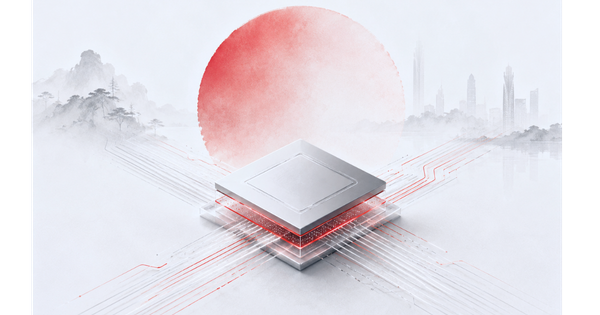
Huawei projects $12 billion in AI chip revenue for 2026, up 60% year over year, as Nvidia's China market share tracks toward 8%
The Financial Times reports Huawei is projecting approximately $12 billion in AI chip revenue for 2026, up at least 60% from $7.5 billion in 2025, with growth concentrated in orders for the Ascend 950PR processor, which entered mass production in March. ByteDance has committed more than $5.6 billion in Ascend purchases this year alone, and Alibaba, Tencent, and Baidu have each placed large-scale orders.
Bernstein analysts, cited in Reuters coverage, estimate Nvidia's China AI chip market share could fall to roughly 8% as Huawei's climbs toward 50%. Those figures are now order-book confirmed rather than forward projections. The 950PR delivers approximately 800 TFLOPS of BF16 throughput per chip versus an H100's 1,979, a real compute gap, but one that's operationally irrelevant for buyers who can't legally purchase H100s and whose software has been ported to Ascend.
The DeepSeek V4 launch, validated on Ascend for inference, closes the software side of this loop: the domestic Chinese compute stack now has both the hardware and the model software to run frontier-class inference workloads at commercial scale.
DeepSeek V4 launches with 1.6 trillion parameters on Huawei Ascend, benchmarks within 0.2 points of Claude Opus 4.6 on SWE-bench, and prices output at $3.48 per million tokens
DeepSeek's V4 release on April 24 comes in two variants: V4-Pro, a 1.6 trillion-parameter mixture-of-experts model at $3.48 per million output tokens, and V4-Flash at $0.28. OpenAI's comparable tier runs at $30 per million tokens and Anthropic's at $25, putting V4-Pro at roughly one-tenth the cost and V4-Flash in the same pricing band as commodity embedding endpoints.
V4-Pro posts a Codeforces rating of 3,206 against GPT-5.4's 3,168, and 80.6% on SWE-bench Verified against Claude Opus 4.6's 80.8%. DeepSeek's own technical report acknowledges V4 trails GPT-5.4 and Gemini 3.1 Pro by approximately three to six months of development, which is a useful calibration. The weights are MIT-licensed, and V4 runs on Huawei Ascend 950 for inference, while V3 ran on Nvidia H800 GPUs.
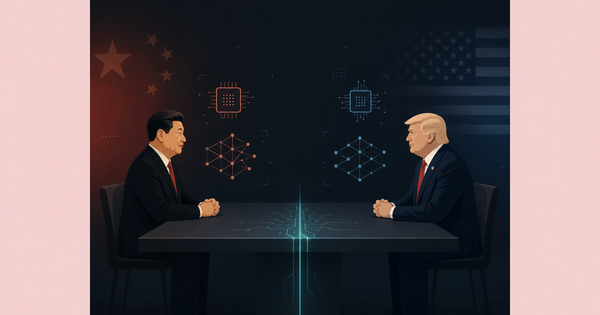
Tom's Hardware's analysis frames that hardware migration as the structurally important detail: the model's production inference path is now fully off Nvidia. The release coincides with escalating U.S. government accusations that DeepSeek and other Chinese AI labs conducted illicit model distillation, a charge China's foreign ministry has called groundless, and lands ahead of a Trump-Xi summit where AI IP and semiconductor export controls are expected agenda items.
Any team currently pricing API cost structures against Western frontier models should now be running the V4-Pro numbers.
OpenAI ends its exclusive cloud arrangement with Microsoft and designates AWS as the distribution hub for its Frontier enterprise platform
OpenAI and Microsoft announced on April 27 a restructuring of their partnership that unwinds the cloud exclusivity arrangement in place since 2019. OpenAI can now serve all of its products to customers on any cloud provider, and Microsoft retains a non-exclusive license to OpenAI's intellectual property through 2032.
The proximate cause was OpenAI's February commitment to expand its AWS relationship by $100 billion over eight years and name AWS as the exclusive third-party distribution provider for Frontier, its enterprise agent-building platform, which directly conflicted with the exclusivity rights Microsoft held.
The Azure OpenAI Service continues, and Microsoft retains model access, so this isn't a breakup; it's a demotion: Azure goes from mandatory infrastructure for enterprise OpenAI workloads to one option among several. Engineering teams that defaulted to Azure because it was the only officially sanctioned path now have real alternatives in AWS-native and multi-cloud configurations.
The Frontier-AWS exclusive is the sharper signal here: OpenAI has placed its enterprise agent infrastructure strategy with AWS, and that's not a positioning likely to be reversed.
Google documents a 32% increase in live prompt injection attacks on public web pages, with PayPal transaction payloads found embedded in ordinary HTML
Google's Security Blog published research documenting a 32% increase in malicious indirect prompt injection activity between November 2025 and February 2026, measured across two to three billion crawled web pages per month.
Forcepoint published corroborating research in the same week. Among the live payloads discovered: fully specified PayPal transaction instructions embedded invisibly in ordinary HTML, targeted at agents with payment execution capabilities.
Decrypt's analysis identifies the structural security problem: no existing firewall, endpoint detection, or IAM platform can flag an AI agent following such a command as anomalous, because from the IAM layer's perspective the agent is authorized to initiate the transaction. The OWASP LLM Top 10 classifies prompt injection as the single most critical vulnerability class in AI applications, and this research confirms it's an active production threat rather than a theoretical exposure.
The 32% growth figure covers only static public web pages; the attack surface across content behind logins, social media, and dynamic sites remains unmeasured. Enterprises deploying web-browsing agents with financial or data write access should be treating this as a current operations concern, not a roadmap item.
Nebraska attorney receives an indefinite bar suspension after an AI-generated brief contains 57 defective citations and 20 fabricated case references
The Nebraska Supreme Court suspended attorney Greg Lake on April 16 after 57 of 63 citations in a divorce appellate brief were flagged as defective, including 20 outright hallucinations and three entirely fabricated cases. Lake initially denied using AI before admitting it in a sworn affidavit.
The Nebraska Supreme Court's decision is the first indefinite bar suspension in the U.S. attributed to AI hallucinations in professionally filed documents. It isn't isolated: U.S. courts imposed at least $145,000 in sanctions against attorneys for AI citation errors in Q1 2026 alone, a pattern the ABA Journal has documented across multiple jurisdictions.
For developers and enterprises deploying AI in licensed professional contexts, the liability chain is now established in case law. It runs from AI system output to professional verification responsibility to career-ending consequences, and it's documented in a public court record.
That precedent doesn't stay in law: it extends to any regulated professional context where AI-generated outputs are submitted as work product without independent verification.
Musk v. Altman trial enters day three with testimony confirming Shivon Zilis served as an information conduit between Musk and OpenAI after his 2018 board exit
Day three of the trial centered on a February 2018 text exchange in which Shivon Zilis asked Musk whether she should "stay close and friendly to OpenAI to keep info flowing," and Musk responded in a message about recruiting OpenAI staff to Tesla, framing Zilis as a bridge between his interests and OpenAI leadership after his official departure.
OpenAI's attorney William Savitt cross-examined Musk on the gap between his pledged "up to $1 billion" in donations and his documented $38 million in actual contributions, and pressed him on whether he'd sought majority equity and board control in a potential for-profit restructuring. Wired's trial coverage has tracked how the cross-examination is building a record of informal early governance that both sides are reading as support for their respective positions.
What's being adjudicated is whether OpenAI's founding nonprofit charter imposed binding constraints on its for-profit conversion, a question with direct implications for its current governance structure, its roughly $300 billion valuation, and the IP terms of every enterprise that's built infrastructure dependencies around its products. The verdict won't resolve that question cleanly regardless of which way it goes.
Amazon deploys a voice-persistent agentic Q&A layer across its product catalog
Amazon's Join the Chat, launched on April 28, is an AI-powered audio Q&A feature on product pages that delivers conversational responses drawing on product features and customer reviews, with audio continuing while the user browses and sessions building on prior exchanges.
Text or voice can steer the conversation. The feature extends Amazon's earlier Hear the Highlights experience and joins Rufus, Amazon's shopping assistant, alongside Help Me Decide and Interests as components of an emerging agentic commerce stack.
The session-persistence architecture is the notable engineering detail: the agent maintains conversation state across page transitions rather than resetting with each interaction, which is a different pattern than the stateless Q&A implementations most commerce teams have been building.
The backend likely runs through Amazon Bedrock, Amazon's managed foundation model infrastructure, though the specific stack hasn't been confirmed. Whether this voice-persistent agent model stays proprietary to Amazon.com or becomes part of the Bedrock surface area available to third-party commerce deployments is the more consequential question for 2026.